
Lab-Grown Diamond Guide
Lab-Grown vs. Natural Diamonds: What’s the Real Difference?
Wondering about the difference between lab-grown and natural diamonds? Discover how they are chemically identical but differ in origin and price. Learn why…
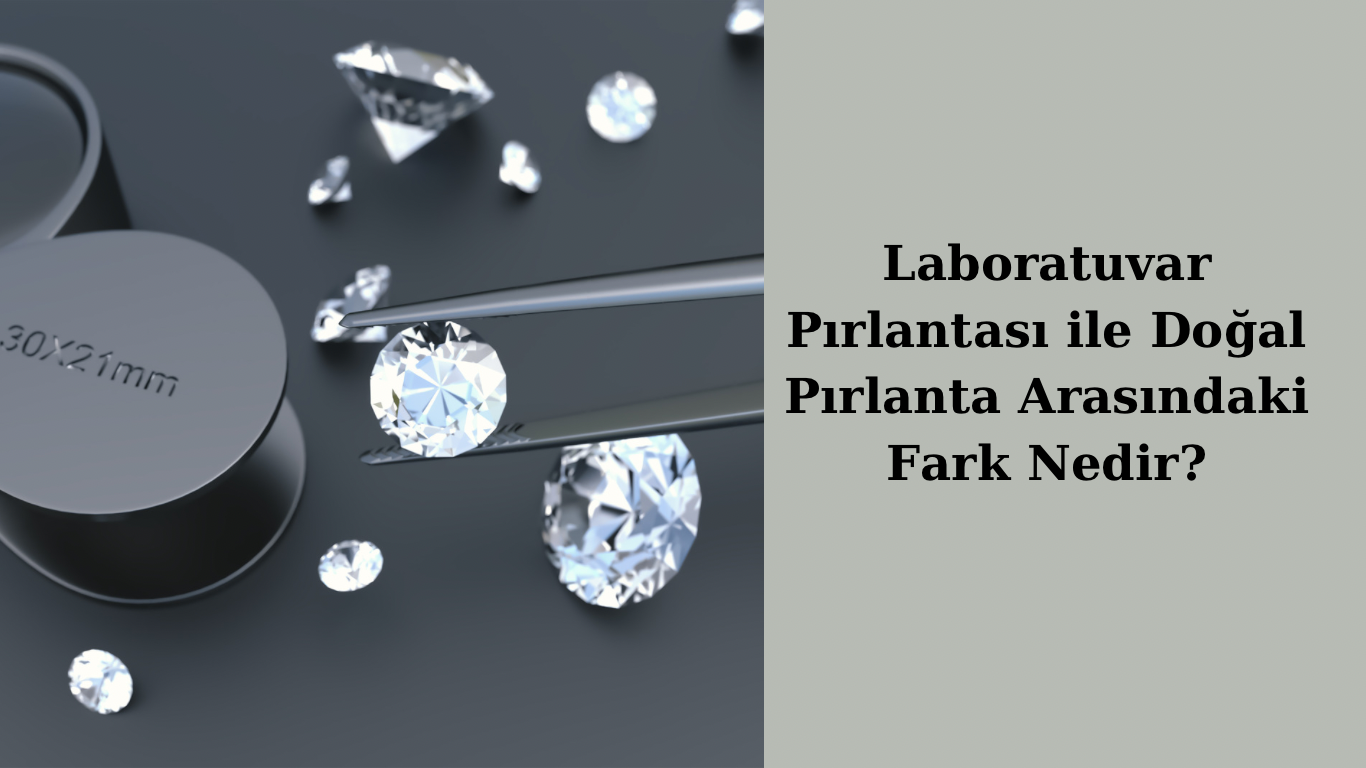
One of the most frequently asked questions when selecting a diamond is the difference between lab-grown and natural diamonds. At first glance, both offer the same dazzling brilliance. This is because, like natural diamonds, lab-grown diamonds are real diamonds made of carbon.
The fundamental difference lies in where and how they are formed. Natural diamonds form deep within the Earth's crust over millions of years, while lab-grown diamonds are cultivated in controlled laboratory environments using advanced technology.
Are Lab-Grown Diamonds Real Diamonds?
Yes. Lab-grown diamonds are real diamonds. Do not confuse them with imitations like glass, zircon, or moissanite. They share the same chemical structure, similar optical properties, and the unique hardness of a diamond.
Because of this, it is impossible to distinguish a lab-grown diamond from a natural one with the naked eye. The distinction can only be made by examining the diamond's origin information using specialized laboratory equipment.
What is a Natural Diamond?
A natural diamond is a cut and polished piece of a diamond crystal that formed deep underground under high pressure and high temperature over millions of years. This process occurs entirely in nature.
The value of a natural diamond is evaluated based on its rarity, formation time, carat, color, clarity, cut, and certification. In traditional diamond understanding, natural diamonds have been accepted as one of the symbols of classic luxury for many years.
What is a Lab-Grown Diamond?
A lab-grown diamond is a real diamond grown using methods that replicate the formation conditions of natural diamonds through technology. Pure carbon atoms are transformed into a crystalline structure in a controlled laboratory environment.
In this production process, methods such as CVD (Chemical Vapor Deposition) and HPHT (High Pressure High Temperature) are typically used. The CVD method allows carbon atoms to grow layer by layer on a diamond seed, while the HPHT method mimics the high pressure and high temperature conditions of the earth.
For more detailed information, you can also check the guides for What is a Lab-Grown Diamond, What is a CVD Diamond, and What is an HPHT Diamond.
Lab-Grown vs. Natural Diamond Comparison
| Feature | Natural Diamond | Lab-Grown Diamond | | :--- | :--- | :--- | | **Formation Location** | Forms naturally underground | Grown in a laboratory using technology | | **Chemical Structure** | Real carbon-based diamond | Real carbon-based diamond | | **Appearance** | Offers diamond brilliance | Offers the same diamond brilliance | | **Hardness** | Possesses the unique high hardness of a diamond | Possesses the unique high hardness of a diamond | | **Origin** | Natural formation | Grown in a laboratory environment | | **Price** | Generally more expensive | Can offer more accessible options with similar appearance | | **Ethical Production** | Based on the mining process | Production process that does not require mining |
Is There a Difference in Appearance?
There is no visible difference between a lab-grown diamond and a natural diamond that can be seen with the naked eye. A well-cut, correctly polished, and high-quality lab-grown diamond offers a look very close to a natural diamond in a solitaire ring, necklace, pendant, or bracelet. The main factors that determine the visual effect of a diamond are carat, cut, color, clarity, and jewelry design. In other words, it is not just whether the diamond is lab-grown or natural, but how it is selected and processed that matters.
Why Is There a Price Difference?
Natural diamonds are generally offered at higher prices due to their rarity and the mining process. Lab-grown diamonds, however, can create more accessible alternatives with similar carat and quality appearances due to their controlled production process.
This is an important advantage, especially for users looking for larger carats. With the same budget, it is possible to achieve a larger, brighter, and more eye-catching diamond appearance.
Is There a Difference in Certification?
Both natural diamonds and lab-grown diamonds can be evaluated with international certificates. The certificate includes the diamond's carat, color, clarity, cut, and origin information.
Certification is especially important when buying a lab-grown diamond. This is because it transparently shows that the diamond is lab-grown, its quality characteristics, and its technical value. Therefore, international laboratory reports like IGI provide confidence in the purchasing decision.
Which is More Logical: Natural or Lab-Grown Diamond?
There is no single correct answer to this question. A natural diamond may be meaningful for those seeking traditional rarity and the classic investment perception. A lab-grown diamond is a strong option for those who want to prefer the same diamond brilliance with a more accessible, modern, and ethical production understanding.
If what is important to you is a larger carat appearance, high color and clarity options, a modern production understanding, and accessible luxury, a lab-grown diamond may be a more advantageous choice.
X Diamond’s Approach to Lab-Grown Diamonds
X Diamond positions lab-grown diamonds at the center of a new generation of jewelry understanding. The goal is not only to offer more accessible prices but to combine strong diamond brilliance, elegant design, and a reliable certification understanding.
In every piece of jewelry, the diamond's cut, brilliance, compatibility with the setting, nail structure, and hand presence are evaluated together. In this way, the lab-grown diamond becomes not just a technical alternative, but a graceful interpretation of modern luxury.
Conclusion: The Difference is in the Story, Not the Look
The most important difference between a lab-grown diamond and a natural diamond is not in the appearance, but in the formation story. Both offer a real diamond effect; however, one forms in nature over millions of years, while the other grows in a laboratory environment using modern technology.
Therefore, when making a choice, it is more correct to focus on your expectations, budget, design taste, and the visual effect you want to get from the diamond, rather than just asking "natural or lab-grown?"
Frequently Asked Questions
Are lab-grown diamonds different from natural diamonds?
The difference between a lab-grown diamond and a natural diamond is the formation process. One forms in nature, the other in a laboratory environment. They cannot be distinguished with the naked eye in terms of appearance and diamond effect.
Are lab-grown diamonds fake?
No. Lab-grown diamonds are not fake. They are different from imitation stones like zircon, glass, or moissanite; they have a real diamond structure.
Are natural diamonds better or lab-grown diamonds?
This preference varies according to expectations. Natural diamonds stand out with the classic rarity perception. Lab-grown diamonds offer advantages with a more accessible price, larger carat appearance, and modern production understanding.
Can lab-grown diamonds be distinguished by eye?
No. It is not possible to distinguish a lab-grown diamond from a natural one with the naked eye. The distinction is made with special laboratory equipment and certificate information.
Why are lab-grown diamonds more affordable?
Lab-grown diamonds can be offered at more accessible prices because they are obtained through a controlled production process and do not require a mining process, offering similar quality and carat appearance to natural diamonds.
Are lab-grown diamonds preferred in solitaire rings?
Yes. Lab-grown diamonds are frequently preferred in solitaire rings. With their large carat appearance, strong brilliance, and modern design options, they are an impressive alternative for engagement rings.
Is certification important for lab-grown diamonds?
Yes. Since the certificate shows the diamond's carat, color, clarity, cut, and origin information, it is an important element of trust in the selection of a lab-grown diamond.