Lab-Grown Diamond Guide
What is a Diamond Certificate? A Guide to IGI Lab-Grown Diamond Reports
Discover what a diamond certificate is and why it matters. This guide explains IGI reports, grading factors like cut and clarity, and how they ensure…
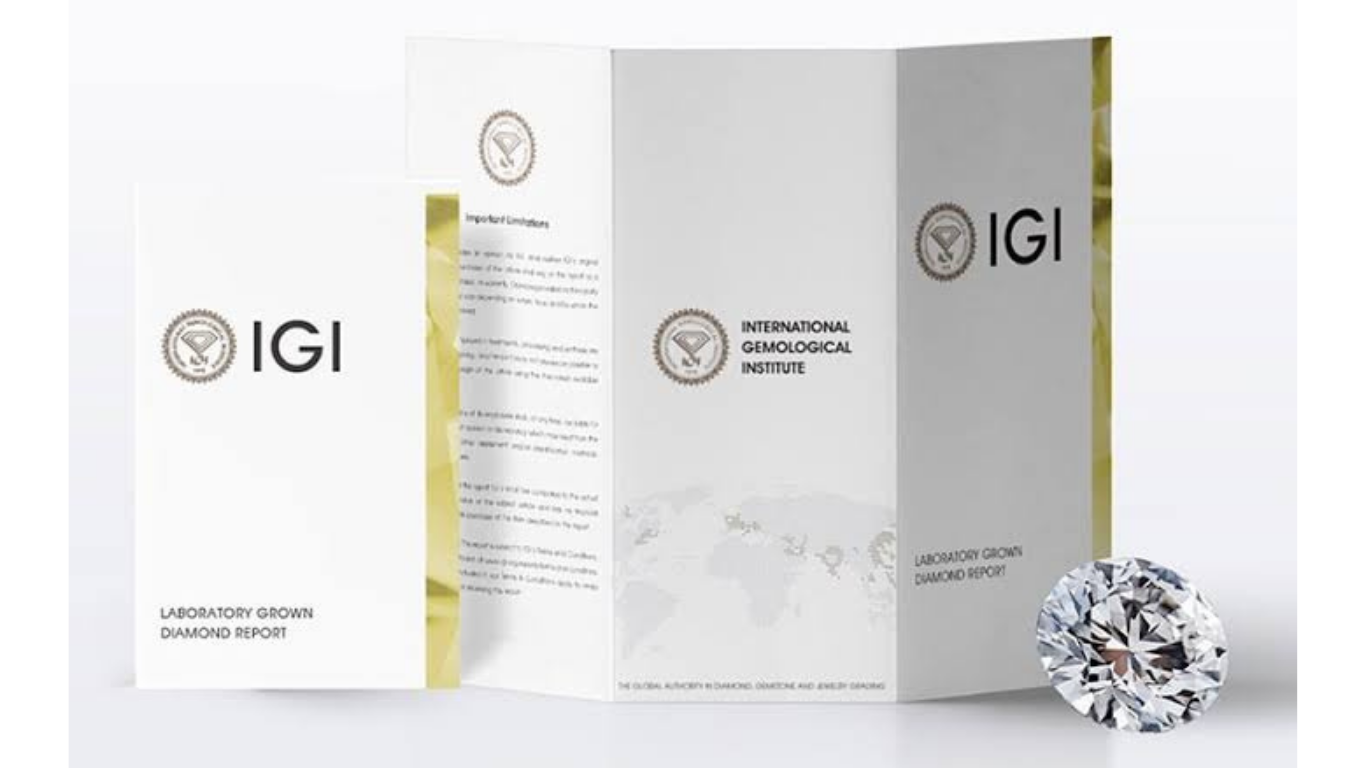
A diamond certificate is an official document that provides an independent assessment of a diamond's quality characteristics. It details the stone's carat, color, clarity, cut, and origin.
When purchasing a diamond, the certificate is one of the most important elements of trust. It allows you to see not just the appearance, but the technical value of the diamond more transparently.
What Does a Diamond Certificate Do?
A diamond certificate documents the specific features of the diamond you purchase. With this document, the diamond's carat weight, color grade, clarity level, cut quality, and information regarding its laboratory or natural origin can be examined more clearly.
Especially for high-carat diamonds, the certificate provides user confidence. It demonstrates that the diamond is backed not only by a seller's claim but by an independent assessment.
What is an IGI Certificate?
The IGI certificate is an international laboratory report that evaluates a diamond's quality characteristics. IGI is one of the most widely used certification organizations globally, particularly in the field of lab-grown diamonds.
In an IGI-certified lab-grown diamond, the diamond's carat, color, clarity, cut details, and laboratory origin are explicitly stated in the report. This allows users to evaluate the diamond's features more consciously.
Why is Certification Important for Lab-Grown Diamonds?
Lab-grown diamonds are real diamonds; the difference lies in their formation process. Therefore, a certificate clearly indicates that the diamond was grown in a laboratory and documents its quality features.
Choosing a certified lab-grown diamond provides a more transparent shopping experience regarding the diamond's origin and technical values. It is particularly important that values such as carat, color, and clarity are documented. To learn more about lab-grown diamonds, you can review the What is a Lab-Grown Diamond guide.
What Information is Included in a Diamond Certificate?
A diamond certificate includes the fundamental quality criteria of a diamond. This information helps you better understand the technical values and visual appearance of the diamond in the jewelry.
- **Carat:** Indicates the weight of the diamond.
- **Color:** Shows the degree of whiteness of the diamond.
- **Clarity:** Specifies the visibility of internal and external inclusions.
- **Cut:** A crucial criterion that affects how the diamond reflects light.
- **Polish:** Shows the quality of the diamond's surface finish.
- **Symmetry:** Expresses the balance and proportion of the diamond's facets.
- **Fluorescence:** Indicates the diamond's reaction under ultraviolet light.
- **Origin:** Specifies whether the diamond is natural or lab-grown.
What Does Carat Information Mean?
Carat is the unit of weight for a diamond. 1 carat equals 0.20 grams. However, in diamond selection, carat is often associated with the visible size of the diamond.
The carat information in the certificate shows the measurable weight of the diamond. However, how the diamond will appear in hand can vary depending on the cut shape and the setting design.
For detailed information on choosing a carat, you can review the How Many Carats Should I Choose? guide.
What Does Color Grade Mean?
In a diamond, the color grade indicates how colorless or white the stone appears. Grade D is the whitest and highest color grade on the scale. Grades E and F are also options that offer a high-level white appearance.
The color of the diamond can become more pronounced, especially in settings with light tones like white gold. Therefore, the color selection should be evaluated along with the overall appearance of the jewelry.
What Does Clarity Grade Mean?
Clarity indicates the visibility of natural inclusions and surface characteristics within the diamond's internal structure. It is indicated by grades such as IF, VVS, VS, and SI.
For most users for daily wear, diamonds that appear clean to the naked eye may be sufficient. However, for high-carat diamonds, clarity may become more visible, so this information in the certificate should be examined carefully.
Why is Cut Information Important?
Cut directly affects how the diamond takes in and reflects light. A well-cut diamond can appear more lively, balanced, and brilliant.
Therefore, the cut information in the certificate is important for understanding the diamond's visual effect. A large carat but poorly cut diamond may not provide the expected brilliance.
What Do Polish, Symmetry, and Fluorescence Mean?
In diamond certificates, along with carat, color, clarity, and cut, information on polish, symmetry, and fluorescence may also be included. These values help understand the diamond's detail quality.
- **Polish:** Shows how well the diamond's surface finish was executed.
- **Symmetry:** Expresses how balanced the diamond's facets and proportions are.
- **Fluorescence:** Indicates the reaction of the diamond under ultraviolet light.
To examine these concepts in more detail, you can check the What are Cut, Polish, Symmetry, and Fluorescence? guide.
The Difference Between Certified and Uncertified Diamonds
A certified diamond is a diamond whose features have been assessed by an independent laboratory. In an uncertified diamond, it may not be possible to control these technical values through an independent report.
Therefore, especially when choosing high-carat, special quality, or lab-grown diamond options, choosing a certified diamond provides a safer and more transparent shopping experience. | Feature | Certified Diamond | Uncertified Diamond | --- | --- | --- | Carat Information | Documented | May not be verified by an independent report | Color and Clarity | Listed in the report | Cannot be compared clearly | Origin Information | Natural or lab-grown origin is specified | May remain unclear | Trust | Offers a more transparent choice | More dependent on the seller's claim |
How to Read an IGI-Certified Lab-Grown Diamond?
When reading an IGI certificate, first the diamond's report number, carat weight, color grade, clarity level, and cut information are examined. Additionally, the information that the diamond was grown in a laboratory environment is included in the report.
In some diamonds, the certificate number can be laser-inscribed on the diamond's edge. This number helps control the match between the diamond and the certificate.
Does a Certificate Affect the Price?
Yes. Since the certificate clarifies the diamond's quality values, it plays an important role in price assessment. Two diamonds with the same carat may have different prices depending on their color, clarity, cut, and certificate information.
Therefore, when comparing diamonds, looking only at the carat value is not enough. All information in the certificate should be evaluated together.
Which Certificate Should Be Preferred When Buying a Lab-Grown Diamond?
When buying a lab-grown diamond, international and accepted laboratory reports should be preferred. IGI is one of the certificate organizations frequently used for lab-grown diamonds.
The important thing is that the origin and quality values of the diamond are clearly documented. In this way, you can evaluate the features of the diamond you purchased more safely.
X Diamond's Approach to Certified Diamonds
At X Diamond, diamond selection is not done solely based on appearance. Carat, color, clarity, cut, and certificate information are evaluated together. In this way, the user can see the technical values of the chosen diamond more clearly.
Certified options in the lab-grown diamond collections, combined with a modern design approach, offer both a transparent and elegant jewelry experience. You can view lab-grown diamond rings to examine certified lab-grown diamond ring models.
Conclusion: Certificates Provide Trust in Diamond Selection
An international diamond certificate is an important document that allows you to see the quality characteristics of a diamond more transparently. Thanks to information on carat, color, clarity, cut, and origin, diamond selection can be made more consciously.
Especially when buying lab-grown diamonds, international certificates like IGI are a strong guide to understanding the true characteristics of the diamond and making a safe selection.
Frequently Asked Questions
What is a diamond certificate?
A diamond certificate is a laboratory report that shows the diamond's carat, color, clarity, cut, and origin information.
What is an IGI certificate?
The IGI certificate is one of the international laboratory reports that evaluates a diamond's quality characteristics. It is frequently used, especially for lab-grown diamonds.
Is a certificate important for lab-grown diamonds?
Yes. Since the certificate shows the origin and quality characteristics of the lab-grown diamond transparently, it is important.
Can I buy an uncertified diamond?
Especially for high-carat or special quality diamonds, certified options offer a safer choice. It may be difficult to control the technical values of an uncertified diamond through an independent report.
What information is found in a diamond certificate?
The certificate may include carat, color, clarity, cut, measurements, polish, symmetry, fluorescence, and the diamond's origin information.
What does the certificate number do?
The certificate number helps control the match between the diamond and the report. In some diamonds, this number is laser-inscribed on the edge of the diamond.
Is an IGI-certified diamond reliable?
IGI is one of the internationally recognized diamond assessment organizations. The IGI certificate allows you to see the technical characteristics of the diamond more transparently.