
Lab-Grown Diamond Guide
What is Total Carat? Understanding Center vs. Side Stone Weight
What is total carat weight? Learn the difference between center stone and side stone carats. Discover how carat weight is calculated in lab-grown diamonds…
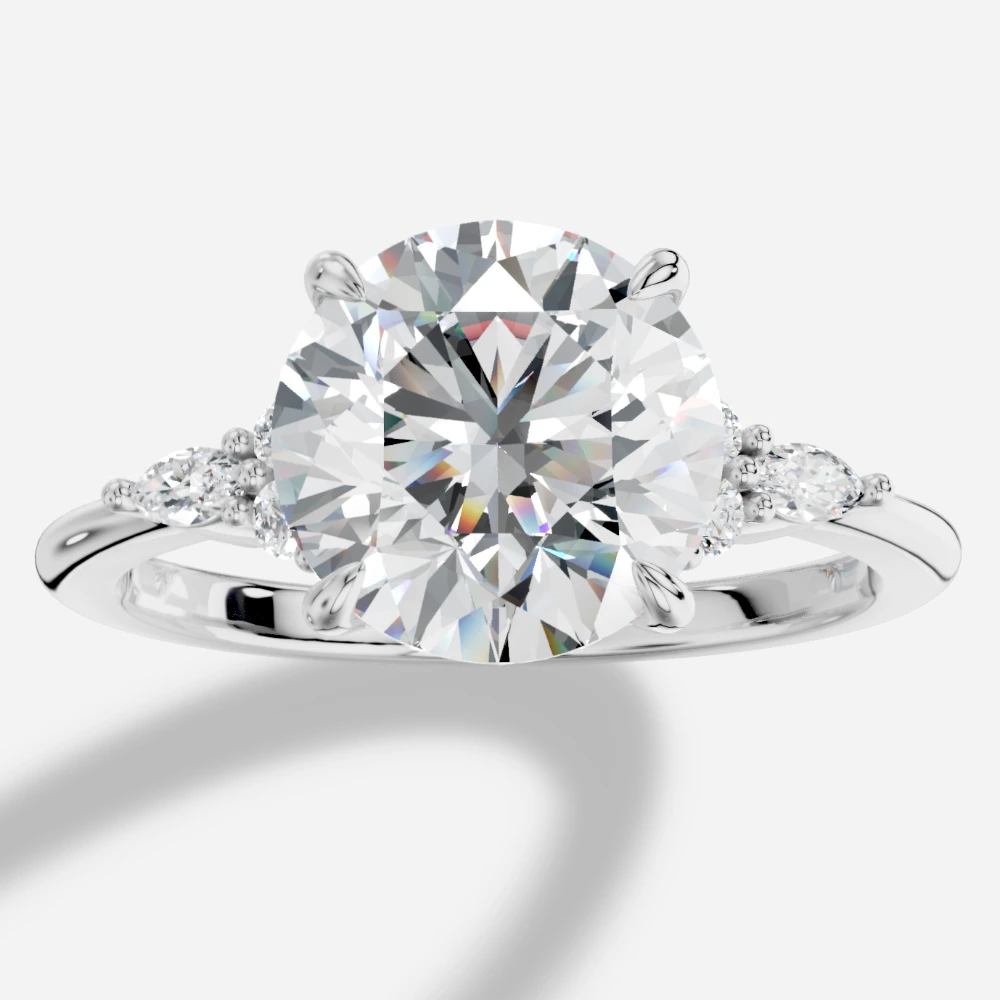
The short answer: Total carat is the sum of the weights of all diamonds in a piece of jewelry. Center stone carat refers specifically to the weight of the main diamond in the design. Therefore, a 1.00 ct total carat ring with side stones is not the same as a 1.00 ct center stone solitaire.
For example, a ring using a 0.70 ct center diamond and 0.30 ct total side diamonds results in a total weight of 1.00 ct. However, there is no single 1.00 ct diamond in the center. Before purchasing, understanding this distinction helps you accurately evaluate the expected appearance on the finger and price comparisons.
What is Carat and What is Total Carat?
Carat (ct) is the unit of weight for a diamond; it is not the diameter or surface measurement. One metric carat equals 0.20 grams, or 200 milligrams. Two diamonds of the same carat can appear different sizes from the top due to their shapes and cut ratios.
You may encounter three separate pieces of information in jewelry descriptions:
- **Center stone carat:** The weight of the single diamond at the center of the ring.
- **Side stone carat:** The total weight of diamonds other than the center stone.
- **Total carat (total carat weight / TCW / CTW):** The combined weight of all diamonds in the jewelry.
Formula: Center stone carat + total side stone carat = total diamond carat.
GIA emphasizes that the carat weight of a single stone should be evaluated separately from the total carat weight of a multi-stone piece of jewelry. GIA's total carat explanation and carat weight guide technically explain this distinction.
Difference Between 1.00 ct Total Diamond and 1.00 ct Solitaire
In all the examples below, the total diamond weight is 1.00 ct; however, the stone seen in the center is not the same size.
| Example Design | Center Stone | Total Side Stones | Total Carat | | :--- | ---: | ---: | ---: | | Simple Solitaire | 1.00 ct | 0.00 ct | 1.00 ct | | Side Stone Ring | 0.70 ct | 0.30 ct | 1.00 ct | | Dense Side Stone Ring | 0.50 ct | 0.50 ct | 1.00 ct |
These are examples created to demonstrate calculation; they are not fixed specifications for a specific X Diamond product. In the first design, all the weight is in the center, while in the others, the weight is distributed among many stones.
Which One Looks Bigger on the Finger?
If you want a single, heavier diamond in the center, focus on the center stone's carat and millimeter measurements. Side stone designs can create a fuller or more detailed appearance by spreading light around the ring. Which one looks larger depends on the center stone's size, shape, setting, and finger structure.
Therefore, instead of deciding based solely on the phrase "1 carat ring," check the distribution in the product details. If you are curious about how different carats look on your finger, you can also check the How Many Carats Will I See on My Finger? guide.
How to Read Total Carat in X Diamond Products
In X Diamond, for a selected variation of a side stone design, such as the Liora lab-grown diamond ring, you might see this distribution:
0.50 ct center + 0.30 ct side stones = 0.80 ct total.
Here, 0.80 ct is not the weight of the center diamond alone. Since the center carat and other options can be changed in the model, always rely on the current summary of the variation you selected during purchase. Do not assume the carat distribution of another product or variation based on this example.
You can compare similar designs in the lab-grown diamond ring collection.
Is the Price the Same If Total Carat Is the Same?
No. Even if the total weight is the same, a single large stone and many small stones do not have the same price structure. The cut, color, clarity grade, millimeter measurements, number of stones, gold setting, craftsmanship, and scope of the report must all be considered together.
For example, a simple ring with a 1.00 ct center stone and a ring consisting of 0.50 ct center + 0.50 ct side stones have only the total weight in common. The individual sizes of the stones, the design, and the production effort are different. Therefore, you should not expect the prices to be equal; it is impossible to say definitively which one will be more expensive based solely on this information.
When comparing prices, also consider other factors mentioned in the Why Are Lab-Grown Diamond Prices Different? guide.
Does the Certificate List the Center Stone or All Diamonds?
It depends on the type of report. A grading report issued for a single loose (not mounted) diamond documents that stone's carat and other characteristics. The presence of this report does not mean all small side stones on the ring are individually graded in the same report.
In contrast, finished jewelry reports can evaluate the stones and jewelry together, to the extent the setting allows inspection. IGI explains that jewelry reports include stone and setting information; however, some gradings may be given as ranges due to the setting. For details, check the IGI Jewelry Reports page.
Ask the seller for this information: which stone or jewelry does the report belong to, how many carats are stated in the report, how are the side stones defined, and can the report number be verified in the official registry? You can read How to Verify an IGI Certificate for verification steps.
How Is Carat Compared in Rings, Earrings, Necklaces, and Bracelets?
**Solitaire ring:** The focal point is the center diamond. If there are no side stones, center and total carat are equal; otherwise, they may differ.
**Halo and side stone rings:** Small diamonds around are added to the total carat. The visual effect of the halo and the weight of the center stone should be evaluated separately.
**Diamond earrings:** "Total 1.00 ct" can refer to the sum of two earrings. It should not be assumed that the two stones are equal weight; ask for the total weight of the pair and the weight of a single earring.
**Tennis bracelet and multi-stone necklace:** Total carat can consist of many small stones. Compare the number of stones, individual or approximate stone measurements, bracelet length, and setting.
Check for every jewelry type whether the total carat is given for a single piece, a pair, or the entire piece of jewelry.
Five Checks Before Buying
- Is the carat in the product title center stone or total carat?
- If there are side stones, how many and what is the total carat?
- What are the center stone's millimeter measurements, cut, color, and clarity?
- If a report like IGI or HRD Antwerp is provided, which stone or jewelry does it cover?
- Is the price, gold setting, and estimated delivery information specific to the variation I selected?
X Diamond models may offer custom production options. Always check the current carat distribution, certificate option, price, and estimated delivery date on the relevant product page.
Frequently Asked Questions
Does 1.00 ct total diamond mean 1.00 ct solitaire?
No. 1.00 ct total can consist of 0.70 ct center stone and 0.30 ct side stones. It only means a single 1.00 ct diamond if the center stone weight is also specified as 1.00 ct.
0.50 ct center + 0.30 ct side stones is how many carats?
Total 0.80 ct diamonds. The center stone remains 0.50 ct.
What does TCW or CTW mean?
Abbreviations for total carat weight. It describes the total weight of diamonds in the jewelry. Check the product description to confirm if the term covers only diamonds or other gemstones.
Why do two rings with the same total carat look different?
Weight can be distributed differently between center and side stones. Also, the diamond's shape, depth, top millimeter measurement, and setting design affect the appearance.
Can the product title say 1.00 ct while the certificate says 0.70 ct?
Yes, if the product total carat is 1.00 ct and the reported center stone is 0.70 ct, the two pieces of information can be compatible. However, the total weight of the side stones should be clearly stated and the scope of the report verified.
Should I choose a side stone ring or a simple solitaire?
If you want a single, prominent stone in the center, focus on center carat. If you want sparkle and detail all around the ring, compare side stone designs. Make your decision based on total carat label, stone distribution, actual appearance, and usage preferences.
Sources
- GIA — Melee: Building Blocks of Contemporary Design (Oct 11, 2017): Difference between individual carat and total carat.
- GIA — Diamond Carat Weight: Definition of carat and relationship to the 4Cs.
- IGI — Jewelry Reports: Scope of finished jewelry reports.
- X Diamond — Liora Ring: Center and side stone carat distribution depending on variation.
This guide is for informational purposes. Current product variations and document scope should be checked separately during purchase.
X Diamond Model Center and Side Stone Carat Examples
It is useful to look at the selected variation of the actual product when comparing total carat to center stone carat. The images below belong to X Diamond products; the weights of the stones can vary depending on the selected carat variation.
Liora: Center Stone and Side Stones Together
In the Liora side stone lab-grown diamond ring example, the selected 0.50 ct center stone and 0.30 ct side stones total 0.80 ct. Since carat values can change in different variants of the product, always compare the center stone and total carat information in the live product details.
Celeste: Comparison with Different Side Stone Totals
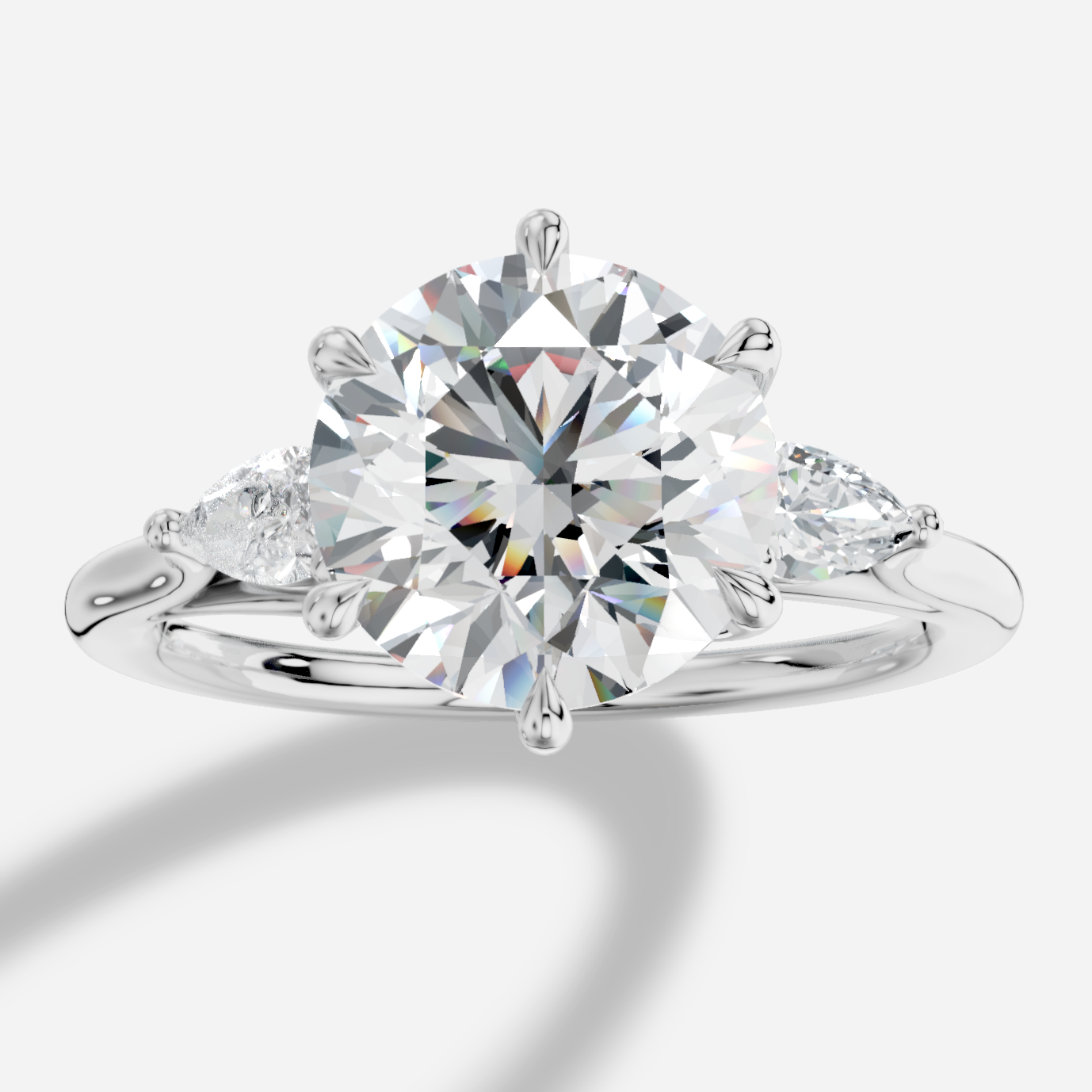
For the Celeste lab-grown diamond side stone ring, when a 0.50 ct center stone and 0.20 ct side stones are selected, a total of 0.70 ct is formed. These examples explain how the general carat changes with different side stone totals at the same center stone carat.
You can examine other designs in side stone diamond ring options, all lab-grown diamond ring category, and the 1 carat lab-grown diamond ring collection.