Lab-Grown Diamond Guide
What are Diamond Colors? A Guide to Lab-Grown Diamonds
Diamond color indicates how colorless a stone appears. It is a key quality factor alongside cut, clarity, and carat. Learn how to choose the perfect shade…
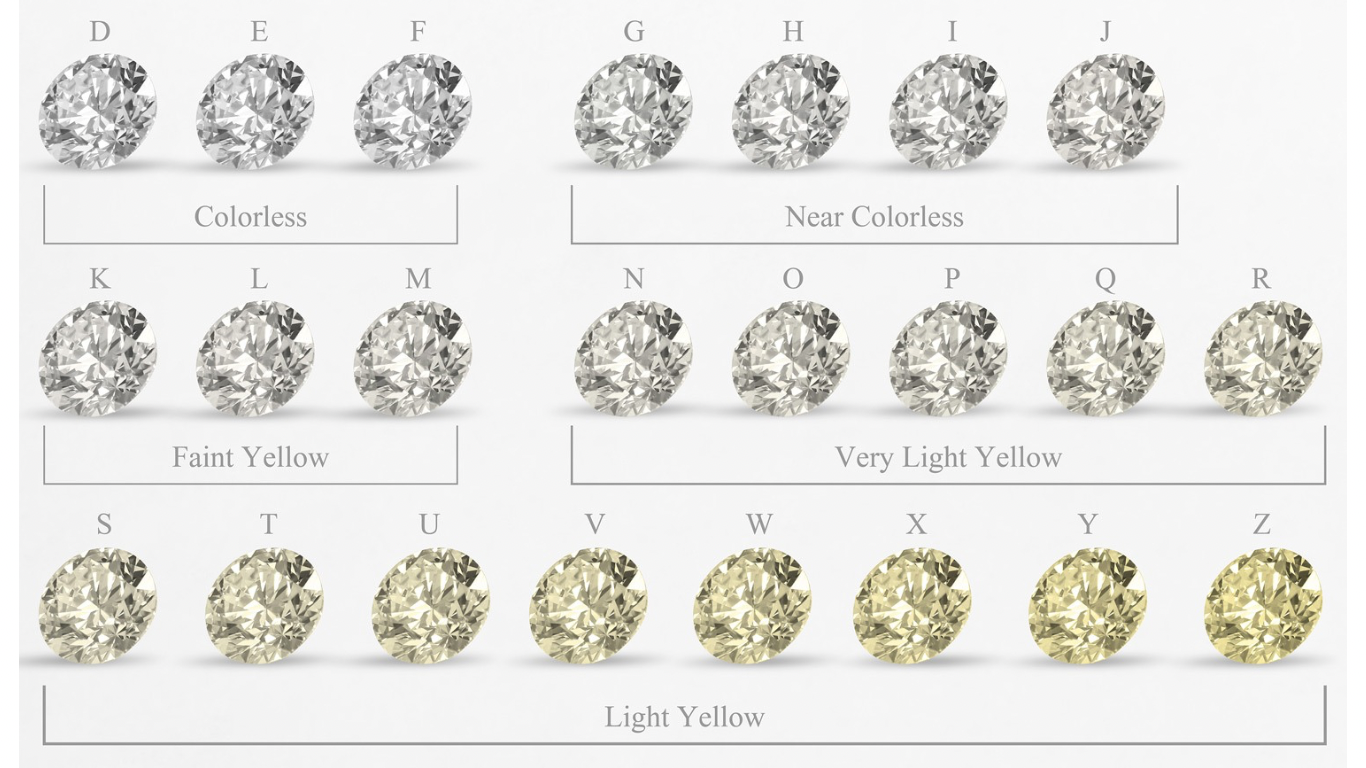
Diamond color refers to the degree to which a diamond appears colorless, white, or tinted. When selecting a diamond, color is one of the most important quality criteria to evaluate alongside carat, clarity, and cut.
The color of a diamond can become more noticeable, especially in white gold settings and larger carat sizes. Therefore, when choosing a diamond, it is essential to pay attention not only to the carat but also to the color grade.
What is Diamond Color?
Diamond color indicates the intensity of the color tone within the stone. The most valuable diamonds are typically those that are colorless or very close to colorless. On the color scale, the letter 'D' represents the whitest and highest degree.
As the color grade progresses, very faint yellow or warm tones may appear in the diamond. While these tones can be difficult to see with the naked eye in some diamonds, they may be more visible in larger carat sizes or designs with open settings.
The Diamond Color Scale
The diamond color scale generally extends from the letter D to the letter Z. D, E, and F colors are considered the highest levels, close to colorless. G, H, I, and J colors are evaluated as tones close to colorless.
| Color Grade | General Description | Visual Effect | | --- | --- | --- | | D | Highest level of whiteness | Offers a very white and premium appearance | | E - F | Top level very close to colorless | Gives a white and clean diamond appearance | | G - H | Close to colorless | Offers a white appearance close to most designs | | I - J | Slight warm tones | May appear more harmonious with yellow or rose gold | | K - Z | More distinct warm tones | Color tone is easier to distinguish |
What is a D Color Diamond?
A D color diamond is the highest level on the color scale. It is considered the diamond color grade with the whitest and most colorless appearance.
D color diamonds offer a very clean, bright, and premium appearance, especially in white gold settings. In larger carat diamonds, choosing D color can demonstrate the stone's whiteness effect more strongly.
What are E and F Color Diamonds?
E and F color diamonds are top-level color grades very close to colorless. These options, which come after D, are strong alternatives for those seeking a white and clean diamond appearance.
With the naked eye, the difference between D, E, and F colors can be quite difficult for most users to distinguish. Therefore, E and F color diamonds can be balanced choices for those seeking a high whiteness effect.
What are G and H Color Diamonds?
G and H color diamonds are evaluated in the category close to colorless. With the right cut and appropriate setting, they can appear quite white and balanced.
For users seeking a balance between budget and quality, the G-H color range can be a logical option in some designs. However, in larger carats and white gold settings, higher color grades can create a more premium effect.
What are I and J Color Diamonds?
I and J color diamonds may have slight warm tones. While these tones can be difficult to see with the naked eye in some diamonds, they may become more visible in certain cuts or larger carats.
Lightly tinted diamonds may appear more harmonious with yellow gold or rose gold settings. Therefore, when choosing a color, it is necessary to look not only at the certificate value but also at the visual balance of the entire jewelry.
Which is the Best Diamond Color?
On paper, the highest color grade is D. However, the best diamond color does not always mean the highest degree. The diamond's carat, cut, clarity, setting color, and budget balance must all be evaluated together.
For those seeking a premium and whitest appearance, D, E, and F colors are strong options. For a more balanced quality-price preference, G and H colors can be sufficient in some designs.
How Much Does Diamond Color Affect Appearance?
Diamond color can affect appearance, especially in larger carat stones and light-colored settings. In smaller carats, color differences may be less pronounced, while in 1.50 ct, 2.00 ct, and larger diamonds, the color grade becomes more noticeable.
Additionally, the cut shape of the diamond can affect color perception. Some cuts reflect light more intensely, which can better mask color; while others can more clearly show the body color of the stone.
Does Cut Shape Change Color Perception?
Yes. The cut shape of the diamond can affect how color is perceived. Cuts like Round and Radiant, which are brighter, can better balance color, while cuts like Emerald and Baguette, which have more open surfaces, can show color more clearly.
- **Round Cut:** Can better balance color due to its intense sparkle.
- **Oval Cut:** Due to its large surface effect, color and brightness should be evaluated together.
- **Emerald Cut:** Color may be more visible due to its net and stepped surfaces.
- **Radiant Cut:** Can soften color perception due to its lively sparkle.
- **Baguette Cut:** The color tone may be more distinct due to its open and geometric structure.
You can check out the Fancy Cut Diamond Rings category to examine different cut shapes.
Does Metal Color Affect Diamond Color?
Yes. The gold color used in the setting can affect the perceived color of the diamond. White gold can make the diamond's whiteness degree more distinct. Yellow gold and rose gold can make slight warm tones more harmonious.
Therefore, in solitaire rings with white gold, colors like D, E, and F can offer a more distinct premium appearance. In yellow or rose gold designs, the color selection can be evaluated more flexibly.
How Should Color Selection Be for Lab-Grown Diamonds?
When choosing color for lab-grown diamonds, the diamond's carat, cut, clarity, and certificate should be evaluated together. Lab-grown diamonds allow access to higher color grades more affordably, so D, E, and F color options are frequently preferred.
Especially combinations like D color with IF or VVS clarity can be a strong preference for users seeking a premium lab-grown diamond appearance. However, the most correct selection should be evaluated with the diamond's actual appearance on the jewelry.
You can review the What is Lab-Grown Diamond guide for detailed information about lab-grown diamonds.
How is Color Read on a Diamond Certificate?
On a diamond certificate, the color grade is usually indicated with a letter system ranging from D to Z. D represents the highest degree of whiteness, while subsequent letters express warmer tones.
The certificate allows you to see the diamond's color information reliably. However, the actual appearance of the diamond on the jewelry should be evaluated together with the cut, setting color, and lighting conditions.
You can review the What is an International Diamond Certificate guide for certificate details.
Is Color or Clarity More Important?
In diamond selection, color and clarity should be evaluated together. While color affects the diamond's whiteness perception, clarity expresses the visibility of internal and external inclusions.
Color may be more distinct in white gold settings. In cuts like Emerald and Baguette with clear surfaces, clarity may gain more importance. Therefore, the selection should be made according to the diamond's cut and design.
You can review the What are Diamond Clarity Grades guide for detailed information about clarity.
Is Color or Cut More Important?
Cut is one of the most important criteria determining the diamond's sparkle. Color, on the other hand, affects the diamond's whiteness perception. Therefore, having a high color degree does not always mean the diamond will look better.
A well-cut diamond can appear more lively by reflecting light more evenly. Therefore, color and cut should be evaluated together when choosing a diamond.
What to Pay Attention to When Choosing Diamond Color?
When choosing a diamond color, the desired appearance, jewelry design, and budget should be considered together. For the whitest appearance, D, E, and F colors stand out, while G-H ranges can also be evaluated for more balanced choices.
- In white gold settings, higher colors offer a more distinct effect.
- In larger carats, the color grade becomes more visible.
- In cuts like Emerald and Baguette, color is easier to distinguish.
- In yellow and rose gold settings, slight warm tones may look more harmonious.
- Choosing a certified diamond allows you to see color information reliably.
X Diamond's Approach to Diamond Color
At X Diamond, diamond color is not only evaluated as the letter grade on the certificate but also as an important detail that completes the overall appearance of the jewelry.
The color of the diamond is considered together with the cut shape, carat, clarity, gold color, setting height, and design language. The goal is to offer the diamond the cleanest, brightest, and most balanced effect possible on the jewelry.
You can check the Lab-Grown Diamond Rings category to examine lab-grown diamond ring models.
Conclusion: The Best Diamond Color is the One that Fits the Design
In diamond color, D, E, and F colors are top-level options that offer the whitest and premium appearance. However, the best color selection should be evaluated together with the diamond's carat, cut, clarity, setting color, and budget.
A well-chosen diamond gains value not only with the color grade on the certificate but also with its actual appearance on the jewelry, its sparkle, and the harmony with its design.
Frequently Asked Questions
What are diamond colors?
Diamond colors are generally evaluated with a letter scale ranging from D to Z. D is the highest and whitest color grade; warmer tones may increase in subsequent letters.
Which is the best diamond color?
D color is considered the highest and whitest degree in the diamond color scale. E and F colors also offer a top-level white appearance.
What does a D color diamond mean?
A D color diamond is the highest level on the color scale. It offers a very white, colorless, and premium appearance.
Are E and F color diamonds good?
Yes. E and F color diamonds are top-level options very close to colorless. They are strong preferences for those seeking a white and clean diamond appearance.
Can I buy a G color diamond?
A G color diamond falls into the category close to colorless. With the right cut and appropriate setting, it can be a balanced choice close to a white appearance.
Is color or clarity more important in diamonds?
This depends on the diamond's carat, cut, and setting color. Color may be more distinct in white gold designs; in Emerald and Baguette cuts, clarity may gain more importance.
Which color should be preferred in lab-grown diamonds?
D, E, and F colors are strong options for a premium appearance in lab-grown diamonds. The most correct selection should be made with the balance of carat, clarity, cut, and budget.
Does metal color affect diamond color?
Yes. White gold can make the diamond's whiteness degree more distinct. Yellow and rose gold can make slight warm tones more harmonious.